Posted on 1 Comment

Review: The Last Hours by Minette Walters

Review of The Last Hours by Minette Walters, an historical fiction novel set in 14th century England during the Black Death.

The Last Hours by Minette Walters cover
Save Me to Pinterest !!!

This post may contain affiliate links, which means I may receive a commission, at no extra cost to you, if you make a purchase through a link. Please see our full disclosure for further information.

Synopsis

The Black Death has arrived in the English port of Melcombe and is spreading north through Devonshire. Contrary to the church’s recommendations, Lady Anne takes the people of Develish within the manor’s moat.

Initially, things are good. No one within the compound sickens. The one man from her absent husband’s retinue that everyone likes returns healthy. Then, with food stores running low, the workers grow bored with nothing to do and no news from outside.

Tensions erupt when a teenaged boy, Jacob, is found dead of a stab injury. Having made some discrete inquiries, Lady Anne’s young steward, Thaddeus, takes a group of Jacob’s contemporaries into the outside world. Seeing the destruction around them makes these young men think of their futures and forces them to grow-up quick.

Review

I found The Last Hours completely unputdownable. It enjoyably captured many aspects of the period around the Black Death. These included widespread ignorance, fear, and superstition. I particularly enjoyed looking at how the shift in power and new beginnings caused by the Death affected this community.

The characters are well thought out, realistic, and fascinating people. Some are strong (like Lady Anne and Thaddeus) and take charge of the situation, while others struggle with change. The religious and moral conflicts within the community seemed real, like I was watching real people interact with each other.

I liked Lady Anne. She’s fair, compassionate, clever, and understands her serfs. However, she is a bit too much like a modern woman. She has modern ideas around hygiene and treats the serfs like equals.

‘I’ve never been on a demesne where serfs were educated, milady. The practice is an unusual one. A villein’s role in life is to labour for his master, not steal time in order to learn letters.’ [Said by a clerk hired by Lady Anne’s husband]

Eleanor (Lady Anne’s daughter) was horrible, but I liked the conflict she added; without her, there would be very little story and the book would suck. I also liked how she gained layers and became more understandable as the story progresses.

I hope the next book resolves Eleanor’s storyline (and maybe brings some much-needed change to her character). I would also like a better reason for Thaddeus’s ramble through the countryside (other than obtaining information and supplies. They were away too long just for that).

Other than that (and a slightly ponderous middle), The Last Hours is a fantastic book. I’m looking forward to reading the sequel.

Conclusion

Have you read The Last Hours? What did you think? Do you agree with what I’ve said about it? Let me know in the comments.
Posted on Leave a comment

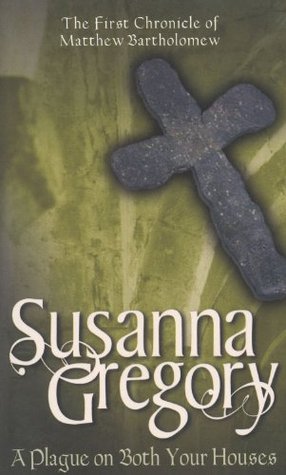
Review: A Plague on Both Your Houses by Susanna Gregory

Review of A Plague on Both Your Houses by Susanna Gregory, the first chronicle of Matthew Bartholomew set in 14th century Cambridge.

A Plague on Both Your Houses by Susanna Gregory cover
Save Me to Pinterest !!!

This post may contain affiliate links, which means I may receive a commission, at no extra cost to you, if you make a purchase through a link. Please see our full disclosure for further information.

Synopsis

After the body of Sir John Babington, Master of Michaelhouse, is found spinning on Cambridge’s millwheel, he is thought to have committed suicide. Then several more Michaelhouse residents die and Dr Matthew Bartholomew becomes suspicious. However, the Bishop is called in to review the deaths and gives orders to cover-up any scandal.

At the same time, rumours circulate that Oxford University is trying to close the competing university at Cambridge by creating problems between town and gown. Then, the plague arrives in Cambridge and all Bartholomew’s time is consumed with treating the dwindling populace.

During the ensuing mess, a woman goes missing and men make surprising confessions. This leads Bartholomew to search out information that puts his life in danger from the men responsible for the earlier deaths.

Review

A Plague on Both Your Houses is a fantastic black-death-era mystery. Sure, the Death may have distracted me (and the characters) from the mystery for a bit, but it became an important part of the story. The book was sprinkled with historical details and interesting information, particularly about the plague.

The story is extremely convoluted and intricate. There are twists and turns in the (very complicated and eventful) mystery with a plot within a plot and dangerous encounters. Even Bartholomew gets confused about what’s going on. Then there’s a disappearance that might be related to the original plots/murders but turns out to be unrelated. I found the “let’s summarise what we know” bits completely necessary.

Very few of the characters are fleshed out enough that I could care about them. Add to that the vast number of minor characters and a character list would have been helpful. There were some characters that appeared early on and then again towards the end, by which time I had forgotten who they were. However, I was gripped by trying to work out which characters were good, and which were bad.

I liked Bartholomew. He’s intelligent, a bit naïve, and genuinely shocked at other people’s deviousness. I loved reading about him trying to deal with the plague and how selfless he was. Bartholomew’s student, Gray, provided a nice contrast to emphasise these qualities.

Gray followed him from house to house carrying the heavy bag that contained Bartholomew’s instruments and medicines. Bartholomew could feel the student’s disapproval as he entered the single-roomed shacks that were home to families of a dozen. The only patient of which Gray did not disapprove was the wife of a merchant. She was one of the few cases with which Bartholomew had had success, and was lying in a bed draped with costly cloths, tired, but still living. The grateful merchant pressed some gold coins into Bartholomew’s hand. Bartholomew wondered whether they would be sufficient to bribe people to drive the carts that collected the dead.

Conclusion

Have you read A Plague on Both Your Houses? What did you think? Do you agree with what I’ve said about it? Let me know in the comments.

Posted on 1 Comment

Review: 11.22.63 by Stephen King

Book review of 11.22.63, a time-travel historical fiction novel by Stephen King, based around the JFK assassination.

11.22.63 by Stephen King cover
Save Me to Pinterest !!!

This post may contain affiliate links, which means I may receive a commission, at no extra cost to you, if you make a purchase through a link. Please see our full disclosure for further information.

Synopsis

Divorced high-school English teacher Jake Epping is marking essays when he receives a strange phone-call from the owner of his favourite diner.

Years ago, Al discovered that his pantry contains a portal to 1958. Over the years, he has made hundreds of journeys into the past, worked out some basic rules of time-travel, and decides to stop the JFK assassination. Unfortunately, he became too unwell to complete his quest and had to return to 2011.

So Jake takes up the baton and makes his own journey to the past. While waiting for that fateful day, Jake takes up a teaching job in Jodie, Texas. In Jodie, he falls in love with beautiful, recently divorced librarian Sadie Dunhill. Their relationship is strained when he moves to Dallas to spy on Lee Harvey Oswald and cannot tell her what he’s doing.

Review

I am usually not a fan of Stephen King. Afterall, his novels are mostly of the thriller/horror type. However, 11.22.63 is more of an alternate reality historical fiction. There is a bit of violence, but nothing too terrifying.

I didn’t like how the author talked about various historical characters as if the reader already knew who they were. This seems perfectly reasonable for ‘big’ characters (like JFK). But who on earth is Frank Anicetti?

The characters were all so realistic and vivid that it made the fantastic things that happen to them believable. Each person was detailed and had their own flaws. I thought this was excellently done; it really helped with the whole suspension of disbelief thing.  

Jake and Sadie’s romance was so lovely. There’s so much honesty and tenderness in their relationship, but it wasn’t at all sappy.

I liked how the book explored time-travel and its consequences. The little details of the past restarting each time someone goes back and each trip lasting two minutes were clever. However, I thought the alternate future bit with reality destroying itself due to the timeline changes was a bit over-the-top.

I loved how both the positive and negative aspects of the settings were shown. The historical time may be exciting and dreamy, but its problems (such as segregation) are included. Even horrible places (like Derry) have little bits of beauty shown (such as those children practicing a lindy-hop dance).

Conclusion

Have you read 11.22.63? What did you think? Do you agree with what I’ve said about it? Let me know in the comments.

Posted on Leave a comment

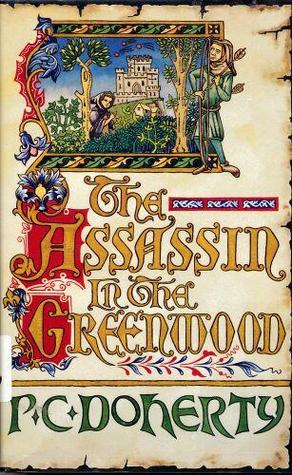
Review: The Assassin in the Greenwood by P.C. Doherty

Review of The Assassin in the Greenwood, a medieval mystery set in 14th century England by P.C. Doherty

The Assassin in the Greenwood by P.C. Doherty cover
Save Me to Pinterest !!!

This post may contain affiliate links, which means I may receive a commission, at no extra cost to you, if you make a purchase through a link. Please see our full disclosure for further information.

Synopsis

Sir Hugh Corbett, King Edward I’s chief clerk and keeper of the Secret Seal, has obtained information that could seriously affect the course of the ongoing hundred years war. However, this information is contained within a cipher that no one has been able to break.

While working on the cipher, Corbett is sent to Nottingham with two of his servants to deal with a spate of lawlessness in the area. Tax collectors have been attacked, the sheriff murdered, and there’s evidence of a traitor inside the castle.

This appears to be the work of Robin Hood, recently pardoned and returned home. However, something about this doesn’t seem right to Corbett and he sets out to ensure that the right man is brought to account.

Review

The Assassin in the Greenwood was an interesting take on the traditional Robin Hood tale. All your favourite characters from the traditional Robin Hood tale appear at some time or other. There are several descriptions of very violent deaths; this didn’t bother me, but might trouble other readers.

I could often feel the atmospheres of particular settings. The castle was so thoroughly described that I felt like I could hear and smell what it was like. The history was obviously very well researched.

The forest had always stood there, the trees providing a canopy to shield the earth from the sky. Beneath this veil of greenness which stretched as far as the eye could see, the forest had witnessed murder as long as it had seen man himself. […]

The trees had seen it all: the gnarled oak, the elm with its branches stooped with age. The forest was a dangerous place, a living thing, and through its green-dappled shadows slunk masked men who knew the secret paths and where to avoid the treacherous morass. Only a fool would wander from the beaten track which wound through Sherwood Forest, either north to Barnsleydale or south to Newark and the great road down to London.

The characters are at times flat and unengaging. Nearly everyone speaks the same and there is very little personality shown in the dialogue. I honestly felt more gripped by the setting (and to some extent the story) than I did by the characters.

Overall, I enjoyed The Assassin in the Greenwood, but not enough to look out for other books by P.C. Doherty. While it was fast paced and engaging, there was no obvious progress towards a solution. It seems that Corbett reaches his conclusions without any effort. I still want to know how he reached his conclusions.

Conclusions

Have you read Assassin in the Greenwood? What did you think? Do you agree with what I’ve said about it? Let me know in the comments.

Posted on Leave a comment

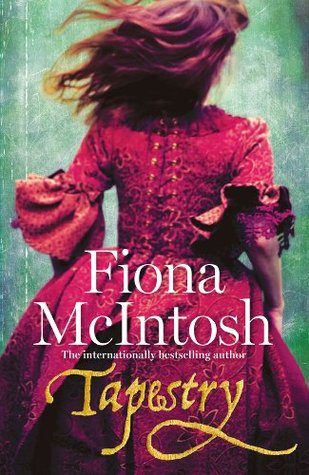
Review: Tapestry by Fiona McIntosh

Review of Tapestry by Fiona McIntosh, a time travelling historical fiction set in the 18th century and 1970s.

Tapestry by Fiona McIntosh cover
Save Me to Pinterest !!!

This post may contain affiliate links, which means I may receive a commission, at no extra cost to you, if you make a purchase through a link. Please see our full disclosure for further information.

Synopsis

Following an incident that leaves her fiancé in a coma, Jane travels to Australia feeling that, somehow, it will help him. After climbing Ayers Rock (Uluru), she wakes up to find herself inhabiting the body of Winifred Maxwell, Countess of Nithsdale. Winifred’s husband, William, has been imprisoned in the Tower of London for his part in the failed 1715 Jacobite Rising.

Acting as Winifred, Jane must travel to London and save William. If she succeeds, her 20th century fiancé will wake-up. Heavy snow and Winifred’s physical frailty work against her, but she is helped by a man called Julius Sackville and Winifred’s friends in London.

Once her quest is over, she has to make some difficult decisions. Does she still want to marry her 20th century fiancée? What about the man she fell in love with in 1715?

Review

The Earl of Nithsdale’s escape from the Tower of London is a fantastic story. I suspect that many authors would write it as straight historical fiction, but adding the mystical time-travel element gave Tapestry a unique angle.

I thought Jane was a strong, courageous, and likeable heroine. However, climbing Uluru as she did, with no water in the middle of the day and with a storm threatening, was unbelievably stupid. I understand that she was driven by worry for her fiancée, and without it there would be no story. It just seemed out of character for such an intelligent person.

The way that Jane spent most of the book in Winifred’s body was confusing at times. Jane does and thinks things, but does things as Winifred and is called ‘Winifred’ by everyone around her. There’s two people in one body – very confusing.

Traquair House was in a state of flux as Winifred prepared for her journey to London. Jane had begged off food and company that evening, desperate to have time alone to think.

I liked how the story occasionally jumped back to the 1970s. I particularly enjoyed the way these ‘jumps’ incorporated the points of view of different people, like Jane’s parents and the nurse who cares for Jane’s fiancée.

Tapestry ended well. For the first 70 or 80 percent of the book, it was average. While the prologue was interesting, it didn’t make any sense until the executions scene. The set-up (getting to know Jane’s life and personality) was effective but long and boring. But the ending, with the escape and return to the 1970s was fantastic.

Conclusion

Have you read Tapestry? What did you think? Do you agree with what I’ve said about it? Let me know in the comments.

Posted on Leave a comment

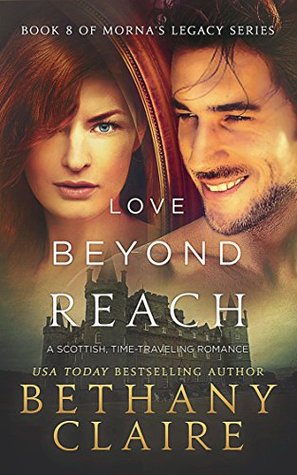
Review: Love Beyond Reach by Bethany Claire

Review of Love Beyond Reach, a time travel romance set in 17th century Scotland by Bethany Claire.

Love Beyond Reach by Bethany Claire cover.
Save Me to Pinterest !!!

This post may contain affiliate links, which means I may receive a commission, at no extra cost to you, if you make a purchase through a link. Please see our full disclosure for further information.

Synopsis

Morna’s father strongly disapproves of her magic abilities and sends away the one person who can teach her. Years later, 20-year-old Morna finds a strange young man. She is Jerry’s best hope at returning to his own time, but first she has to learn all she can from some recently discovered spell-books left behind by her teacher.

As they spend more time together, Morna and Jerry grow to love each other. Then Morna’s father dies, and her old teacher returns and takes Jerry. Heartbroken, Morna agrees to marry her brother’s friend but finds that he is not the man she thought he was and leaves to fight to get Jerry back.

Review

Love Beyond Reach is the eighth book in the Morna’s Legacy series and is apparently something of a prequel. I haven’t read the previous books yet but think that I might appreciate Love Beyond Reach more once I have. I love how it was written as a book meant to help the woman in the next book. It’s definitely left me wanting more.

This book could be called a romance novel. I thoroughly enjoyed the scenes where Morna and Jerry were falling in love. However, the romance was far from overwhelming. There was a lot of intrigue and other sub-plots, so I initially categorised it as historical fiction, not romance.

The characters were all well developed and memorable, even minor characters. Morna’s brother, Alasdair, was so caring and protective of his family. Her one-time fiancée Henry had an interesting arc where we gradually discover just how bad he really is. And Mary, the housekeeper, was such a forceful, loyal, and organised person that I just had to like her.

I really liked Morna. She may not do things the way she’s expected to, but she follows her instincts and gets things done. I loved how close she was to her family and lengths she goes to protect them. Despite constant challenges, Morna keeps learning and becomes the person her brother believes she can be.

“But yer death is a ruse to save yer brother from a violent clash with Henry’s clan.”

So Henry would keep his word and spread the news of my witchcraft, and my death is all that could prevent the bloodshed of others. I would gladly fake my death for such a cause. […]

Until he asked the question, I’d not stopped to think about the ramifications of faking my own death. I would never be able to see all those I loved. For them, it would seem as if I truly were dead. It would be my last time to see my home, my nephew, my brother.

Love Beyond Reach could have been set in any time or place. There is almost nothing that sticks it to 17th century Scotland. Sure, the dialogue has the occasional bit of Scottish brogue, but the setting isn’t developed enough.

Conclusion

Have you read Love Beyond Reach? What did you think? Do you agree with what I’ve said about it? Let me know in the comments.

Posted on Leave a comment

Review: Letters from Skye by Jessica Brockmole

Review of Letters from Skye, an historical romance novel by Jessica Brockmole, set in Scotland during World Wars One and Two

Letters from Skye by Jessica Brockmole cover
Save Me to Pinterest !!!

This post may contain affiliate links, which means I may receive a commission, at no extra cost to you, if you make a purchase through a link. Please see our full disclosure for further information.

Synopsis

In 1912, an impetuous young American sends a letter to the author of his favourite book of poetry. Thus begins a friendship that blossoms into romance just as war begins. Davey volunteers as an ambulance driver in France, prompting Elspeth to overcome her fear of boats in order to see him.

Meanwhile, in 1940, Elspeth’s daughter, Margaret, has stumbled across her mother’s old letters. Curious, she starts asking questions. This prompts Elspeth to go to London without warning and looking for Davey. With her mother gone, Margaret resorts to contacting a long-lost uncle and travelling to Skye for the answers to her questions.

Review

Letters from Skye takes the style of a collection of letters. In my opinion, this is a great way to tell this story. We get to see into Elspeth and Davey’s minds and really experience the growth of their relationship. However, it is set in some amazing places which couldn’t be fully developed.

While a bit modern, the letters were very gripping. The back and forth between the characters created tension and really involved my emotions in Elspeth and Davey’s relationship. Their friendship was so deep, and their developing romance helped the keep things light amidst a dark time.

I didn’t like the way some of the letters talked about things that both sender and recipient were present for. The person the letter is addressed to was there and knows what happened. There’s no need for such an explanation in letter writing. I’m sure the author could have come up with a better way to impart this information, if necessary.

One of the issues dealt with in Letters from Skye is adultery. Elspeth is married when she and Davey begin their relationship. There’s also Elspeth’s brother, who ‘steals’ their other brother’s fiancée when he’s injured in the war. This wasn’t a problem for me, but I understand that it might trouble some readers.

All that being said, I thoroughly enjoyed this book. It gripped me right from the beginning, and as much as I wanted answers, I didn’t want the story to end. It left me with such a book hangover.

And I loved how Elspeth and Davey loved books. I can imagine myself getting lost on a street full of bookstores just like Elspeth does at one point.

Conclusion

Have you read Letters from Skye? What did you think? Do you agree with what I’ve said about it? Let me know in the comments.

Posted on 2 Comments

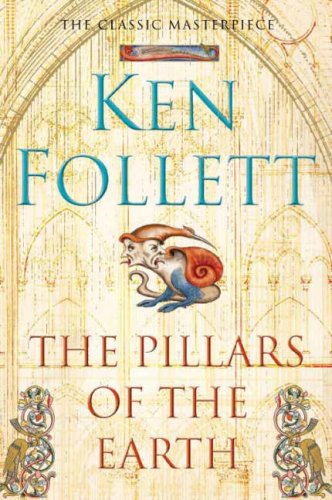
Review: The Pillars of the Earth by Ken Follett

Review of The Pillars of the Earth, an epic historical fiction novel set in 12th century England by Ken Follett

The Pillars of the Earth by Ken Follett cover
Save Me to Pinterest !!!

This post may contain affiliate links, which means I may receive a commission, at no extra cost to you, if you make a purchase through a link. Please see our full disclosure for further information.

Synopsis

When the cathedral at Kingsbridge burns down, the newly appointed prior hires Tom Builder to manage the rebuild. In order to pay for the new cathedral, Prior Philip asks King Stephen for the rights to take stone from a nearby quarry and wood from a local forest. This puts him at odds with Bishop Waleran, who wants the wealth now owned by the priory for his own projects.

In the secular world, England is embroiled in a civil war over who the crown rightfully belongs to. Small-time knight Percy Hamleigh hears that the Earl of Shiring is conspiring against King Stephen and attacks the Earl’s castle. Percy’s son (William) is bitter over the Earl’s daughter (Aliena) breaking their betrothal and delights in leaving her destitute.

Kingsbridge prospers under Prior Philip’s capable leadership. Tom Builder’s family prospers as the cathedral grows. Aliena also prospers, as she has become a successful wool merchant and singlehandedly funded her brother’s goal of retaking the earldom. This angers William, who tries several times to destroy the town and steal the income for his own lands.

Review

The Pillars of the Earth has a slow start. It promises to be a book about the building of a cathedral in the fictional town of Kingsbridge. However, I was disappointed by the first couple of hundred pages as there was no cathedral and it wasn’t even set in Kingsbridge. Even once the story arrives in Kingsbridge, there seems to be no need to build a cathedral.

I enjoyed the ongoing conflicts between Prior Philip and Bishop Waleran, and between the Hamleighs and Aliena. They have such ‘on-sight’ rivalries that affected their actions (and much of the story). I was particularly amused by the way these rivalries mirrored the conflict between King Stephen and the Empress Matilda in the 12th century.

I also enjoyed how the relationships between the characters change over time. For example, when Aliena and Prior Philip first meet, Philip helps Aliena and they become good friends. Then Philip prevents Aliena and Jack from living together, and their relationship sours. This seems more like real life than the always consistent relationships I’m used to seeing in novels.

I loved how many various threads there are to this story. There’s the tale of Jonathan being abandoned by his family and raised by the monks. I enjoyed the mystery of what happened to Jack Shareburg and why. Then there’s the story of the earldom of Shiring and the competition between Aliena’s family and the Hamleighs.

Occasionally, one of the characters will use a word that doesn’t sound right in the historical setting. I understand that no one spoke modern English in the 12th century, but some words just don’t fit. I would give some examples, but they’re too crude for my liking.

Guided by a Stone-Mason (Complementary reading)

While reading The Pillars of the Earth, I kept a book called’ Guided by a Stone-Mason: The Cathedrals, Abbeys and Churches of Britain Unveiled’ by Thomas Maude close at hand.

I found it difficult to picture where different parts of the cathedral were located, and the technical terms were difficult to follow. Guided by a Stone-Mason helped me with this. It also has information on other aspects of cathedral building (like types of stone) if you’re interested.

Conclusion

Have you read The Pillars of the Earth? What did you think? Do you agree with what I’ve said about it? Let me know in the comments.

Posted on Leave a comment

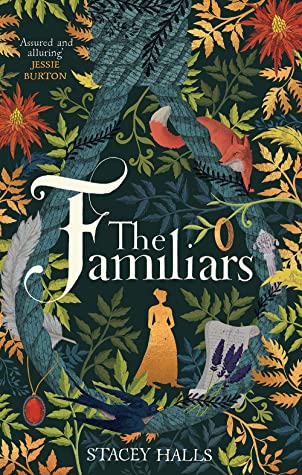
Review: The Familiars by Stacey Halls

Review of The Familiars, an historical fiction novel set in 17th century England by Stacey Halls.

The Familiars by Stacey Halls cover
Save Me to Pinterest !!!

This post may contain affiliate links, which means I may receive a commission, at no extra cost to you, if you make a purchase through a link. Please see our full disclosure for further information.

Synopsis

Fleetwood Shuttleworth has suffered three miscarriages, is now pregnant again, and just found a letter from a doctor advising her husband that his wife would not survive another pregnancy. Anxious to provide her husband with an heir, she hires Alice Gray, a local midwife with extraordinary abilities.

Then Alice is caught up in the Pendle Witch Trials. Convinced that she must have Alice with her when she gives birth, Fleetwood throws everything she has behind keeping Alice from being arrested. Three lives depend on her success.

However, she uncovers a devastating secret and Alice is still imprisoned. She continues to fight, but the truth doesn’t come to light until Fleetwood goes into labour on the day of the trials.

Review

The Familiars is an average book. I enjoyed reading it, but it’s nothing spectacular and I won’t be returning to it again and again. There is another book by Stacey Halls that looks interesting (The Foundling) but having read The Familiars, I’m hesitant to pay full price for another book by this author.

I enjoyed how there were real-life people and events scattered throughout the book. The story is based on the real-life Pendle Witch Trials. Fleetwood was the name of the lady of nearby Gawthorpe Hall at the time of the trials. However, there is no evidence that the real-life Fleetwood was involved in the trials or knew any of the Pendle witches (otherwise, it’s detailed and informative).

The author succeeded in creating a brilliantly poignant, fraught atmosphere. The pacing is never hurried but doesn’t drag either. I liked how the straightforward writing complimented Fleetwood’s uncomplicated character. Together, the heavy atmosphere, unhurried pacing, and straightforward writing builds suspense, especially around Fleetwood’s doubting those she should trust.

I searched the stacks of letters organised and filed in some unknown method, remembering how James had brought me the neat parcel or correspondence about my failed pregnancies. Another rage was burning inside me: Richard did not think it prudent to inform me of my impending death, and now he had removed from the house the only person I could trust to save me. I realised I was shaking, and hot tears were blurring my sight.

Fleetwood underwent a great deal of growth during the story. At the beginning, she accepts the way her world is and trusts people easily. By the end, she has taken risks to protect her friend and questioned previously accepted ‘facts’. Throughout the book, she shows hope and determination, and develops courage and an unbreakable friendship.

Conclusion

Have you read The Familiars? What did you think? Do you agree with what I’ve said about it? Let me know in the comments.
Posted on Leave a comment

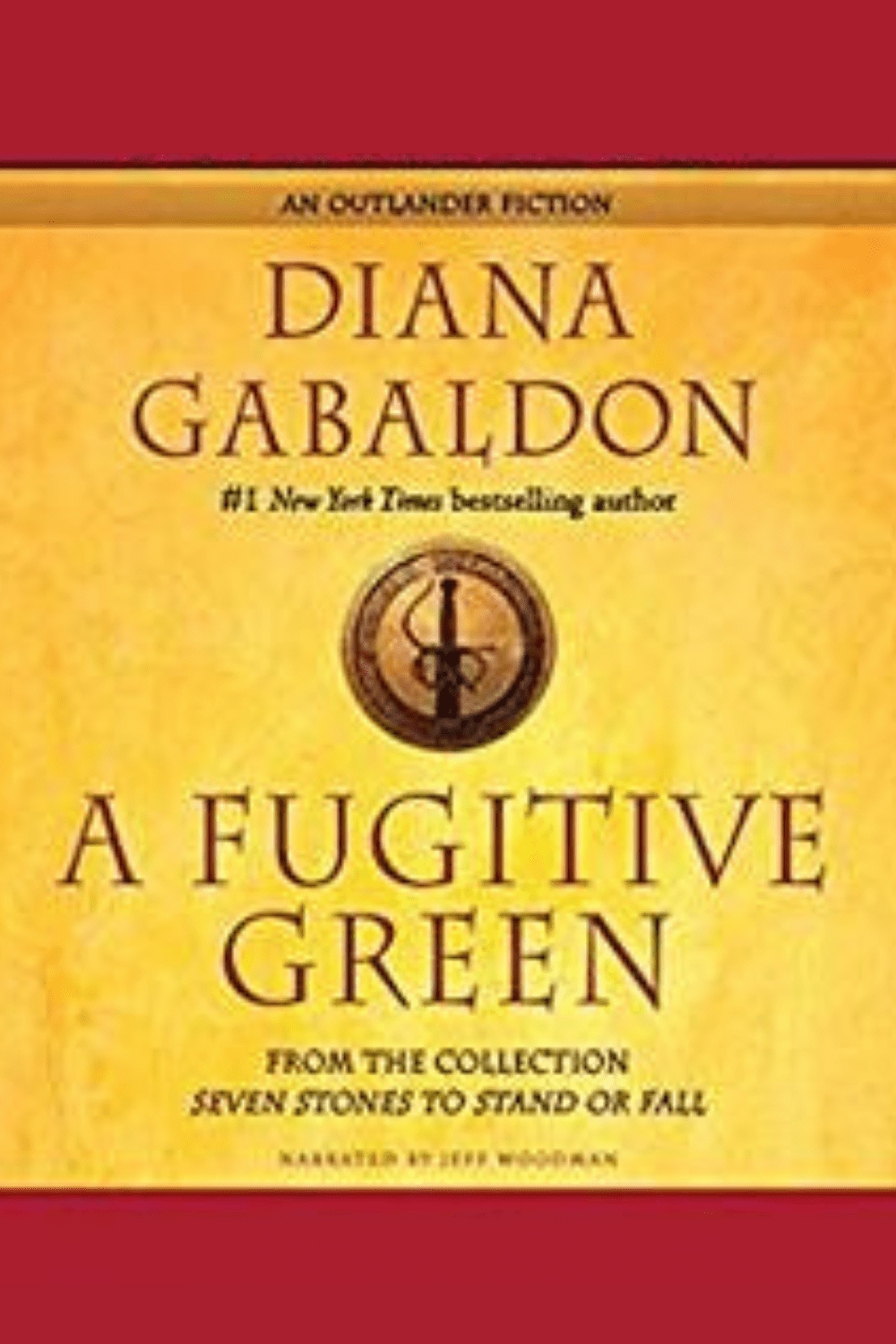
Review: A Fugitive Green by Diana Gabaldon

Book review of A Fugitive Green, an historical novella by Diana Gabaldon, author of the Outlander books.

A Fugitive Green by Diana Gabaldon cover
Save Me to Pinterest !!!

This post may contain affiliate links, which means I may receive a commission, at no extra cost to you, if you make a purchase through a link. Please see our full disclosure for further information.

Synopsis

This novella tells the story of how Lord John’s brother, Hal (the Duke of Pardloe), met his wife. Minnie is sent by her father to London, ostensibly to search for a husband, but really to obtain information. While there, she takes the opportunity to find out what happened to her mother.

Hal is struggling with grief over the death of his first wife, Esme. At the same time, he is facing a possible court martial over the duel he fought with Esme’s lover, Nathaniel Twelvetrees (the result of which was that worthy’s death), while trying to rebuild his father’s regiment.

Two men approach Minnie, wanting her to get hold of letters exchanged between Esme and her lover. Harry Quarry is a friend of Hal’s and wishes to prove that Hal had good reason to fight and kill Nathaniel. Edward Twelvetrees, Nathaniel’s brother, wants to destroy all evidence of an affair so that Hal will be convicted of murder and his regiment will be destroyed for good.

Review

A Fugitive Green is full of action and thought. A lot of things happen in a short space. There is one scene with overly detailed descriptions of various plants, but it is the exception in this particular book.

In Diana Gabaldon’s ‘big books,’ Hal isn’t a super loveable character. He’s honourable, loyal, and loves his family, but he doesn’t inspire any great emotion. A Fugitive Green gave me a greater appreciation for Hal and I really felt sympathetic towards him.

‘He turned away and, chilled, made his way by instinct toward the fire. He’d felt as though he were moving through cold honey ever since he’d forced himself out of bed, and now he collapsed joint by joint into his father’s chair.

‘His father’s chair. Blast. He closed his eyes, trying to summon the will to stand up and move. The leather was cold and stiff under his fingers, under his legs, hard against his back. He could feel the fire, a few feet away in its hearth, but the heat didn’t reach him.’

It took me a while to get used to Harry Quarry as a nice 21-year-old rather than a lecherous middle-aged man. Harry appears multiple times through the Lord John stories, but almost always writing lewd poetry or eating/drinking excessively or ‘admiring’ some woman. Here, he’s young, handsome, and acting nobly.

Minnie was such an enjoyable character to read about. She’s independent, spirited, and sassy. I liked how most of A Fugitive Green was told from Minnie’s point of view; it helped me to get to know her and her background. Afterall, we already know Hal’s backstory from the Lord John books, but not Minnie’s.

While Minnie’s search for her mother was touching, the story she eventually uncovered about her conception and birth was disturbing. Seriously, a nun who’s so clueless and distressed over having a child that she goes insane? Sick! However, Minnie’s relationship with her father was adorable.

Conclusion

Have you read A Fugitive Green? What did you think? Do you agree with what I’ve said about it? Let me know in the comments.

If you haven’t, it is found in the collection Seven Stones to Stand or Fall.